
A manager listening to a colleague who is struggling
Mental health training for managers · Built around your organisation

Mental Health Training for Managers

Your managers are the first person someone turns to. Make sure they know what to do

A programme built around your own policies, your sector and your support pathways, and backed by a branded manager app that keeps the answers in their pocket long after the day ends.

½ or 1 day
Depth sets the length
Bespoke
Written for your policies
Your app
Branded, included
✓ Half Day or Full DayWe advise once we know your needs
✓ Face to Face or OnlineIdentical programme either way
✓ Fully Bespoke To Your OrganisationYour policies, your sector, your language
✓ Includes Your Branded Manager AppAs far as we know, no one else in the UK offers this
What makes this different

Not just another manager awareness course

Most manager mental health training gives you a course, a workbook and the hope that something from the day sticks when a difficult situation arises three months later.

This programme does something different. Three things, in fact, that no standard training can offer.

01

It is built around your organisation

Your HR policies. Your wellbeing framework. Your return to work procedures. Your internal support contacts. Not referenced at the end, the foundation of the whole programme.

02

It gives managers confidence beyond the course

Every manager leaves with their own branded app: your colours, your policies, your support pathways built in. When someone knocks on the door, the answer is right there.

03

It removes the ifs, buts and maybes

The law is clear about a manager's duty of care. Your managers leave knowing exactly what that means for them, in your organisation, within your sector.

The gap

Most managers want to support their team. Most have never been shown how.

Wellbeing policies are in place. Support pathways exist. But when a team member is struggling, the first person they turn to is not HR or a helpline. It is their manager.

And most managers, however capable, have never been given the knowledge or the confidence to handle that conversation well. They worry about saying the wrong thing. They are not sure what they are legally required to do.

That gap, between what organisations expect of their managers and what they equip them to do, is where things go wrong. This programme closes it.

Policies don't support people. Managers do.

Three people carry the cost when the gap is left open: the person who needed support, the manager who wanted to help, and the organisation that assumed the policy covered it.

Our programme

What this programme covers

The eight areas below form the foundation. Each is adapted to reflect your policies, your structure and your sector.

01

Mental health awareness

What mental health is, how it affects people at work, and how to recognise when a team member may be struggling.

02

Employment law and duty of care

Employer and manager responsibilities, including the Equality Act, the Health and Safety at Work Act and relevant employment legislation.

03

Your organisation's wellbeing policy

How your specific framework works and what managers are expected to do within it.

04

Return to work and absence management

Handling return to work conversations with confidence and managing absence in a way that supports recovery and meets your HR policies.

05

Supportive conversations

How to open a conversation with someone who may be struggling, what to say, what to avoid, and how to listen in a way that actually helps.

06

Creating an environment that promotes good mental health

Practical steps managers can take to build a team culture where people feel safe to talk and difficulties are noticed earlier.

07

Signposting and referrals

What support is available inside and outside the organisation, and how to connect a team member with the right help.

08

Mental health conditions

Common presentations including anxiety, depression, stress and burnout, covered in as much depth as your organisation needs.

Heavily regulated environments usually go deeper into policy and legislation. Organisations wanting to focus on the human side spend more time on conditions, conversations and culture. We build the programme around what your managers actually need.

Your branded manager app

The confidence to get it right. Long after the course ends.

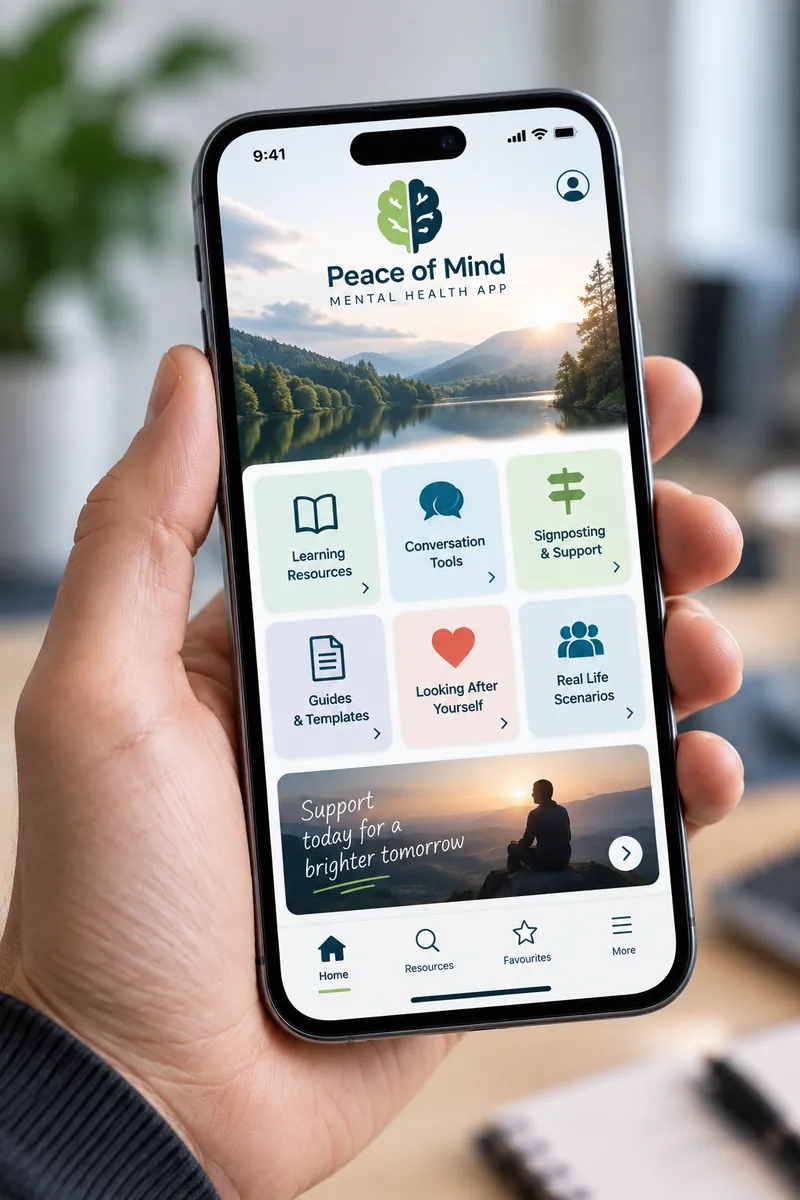
Training gives managers knowledge. The app gives them confidence. Your logo, your colours, your policies, your internal support contacts and referral pathways built directly into the tool.

The Reach Out learner app

The key learning, always to hand

A reminder of everything covered in the programme, available whenever they need it, not a memory of a day three months ago.

Practical guides for real situations

Starting a difficult conversation. Managing an absence. Supporting a return to work. Plus prompts for spotting the signs that someone is struggling.

Your policies, not ours

Your wellbeing policy, support contacts and referral pathways built directly in. No searching for the right document at the worst possible moment. Content keeps updating as the platform develops.

Why this matters

Without something to refer back to, confidence fades and uncertainty creeps back in. The app is what turns a training day into something that lives inside your organisation permanently.

Built around your organisation
Your policies

Built around your organisation, not the other way around

Your HR policies, employment contracts, internal support systems and your sector's regulatory requirements are not the same as anyone else's. So we don't hand your managers a standard programme and ask them to work out how it applies.

Example

We have delivered this programme for a major UK regulatory body in a safety-critical environment. Their version leans heavily into policy, procedure and duty of care. Another sector would get a programme that looks quite different while covering the same essential ground.

What that means in practice
✓Your employment policies, wellbeing framework and absence procedures are woven into the content, not referenced as an afterthought.
✓Sector-specific content reflects the pressures and realities your managers actually work in.
✓The balance between policy, conditions and conversations is adjusted to what your managers need to feel confident.
✓Your branded app reflects your support contacts, referral pathways and structure, everything at their fingertips.
Format and delivery

How it runs

What's included

✓Full programme design and build, tailored to your organisation
✓Half day or full day delivery by a qualified Piece of Mind trainer
✓Your organisation's own branded manager app
✓Programme materials and supporting resources
✓Post-programme support and follow-up
Duration

Half day or full day, depending on the depth of content required. We advise on the right length once we understand your needs.

Delivery

Face to face at your premises or our training centre, or fully online via live interactive sessions. The programme and the app are identical either way.

Group size

Designed for management teams and cohorts. Tell us your numbers and we'll advise on the best approach.

Pricing

Quoted bespoke, based on your size, format and the depth of content needed. Get in touch to start the conversation.

Why us

Why Piece of Mind Training

Delivered by people who understand this from the inside

Our trainers are practising therapists who work with people navigating mental health challenges every week. They bring that into the room, not the content from a manual.

Built around your organisation, not ours

We take the time to understand your organisation, your policies and your people before we build anything. The result is training your managers can use on Monday morning.

Support that stays with your managers

The branded manager app means the learning doesn't stop when the session ends, in your organisation's own language, for as long as they need it.

Our work

What working with us looks like

Two recent pieces of work, shared with the organisations' names left out.

“

We've worked with Andy across several areas of our organisation, particularly around Mental Health First Aid provision. From the outset, Andy took the time to understand what we were trying to achieve and worked in partnership with us to shape the right solution for both our business and our customers.

What has stood out most is the way Andy operates as a genuine extension of our team rather than simply as an external supplier. He brings strong subject-matter expertise, is highly responsive, and has consistently helped us identify and deliver the most appropriate provision.

The results to date have been excellent, and we would be very happy to recommend Andy and Piece of Mind to other organisations looking for a trusted, consultative partner in this space.

Steven Nelson
Managing Director, Synergie Training
Case study

Mental health first aid across the UK and Europe

A multinational organisation in a safety critical industry, with teams in the UK and Norway.
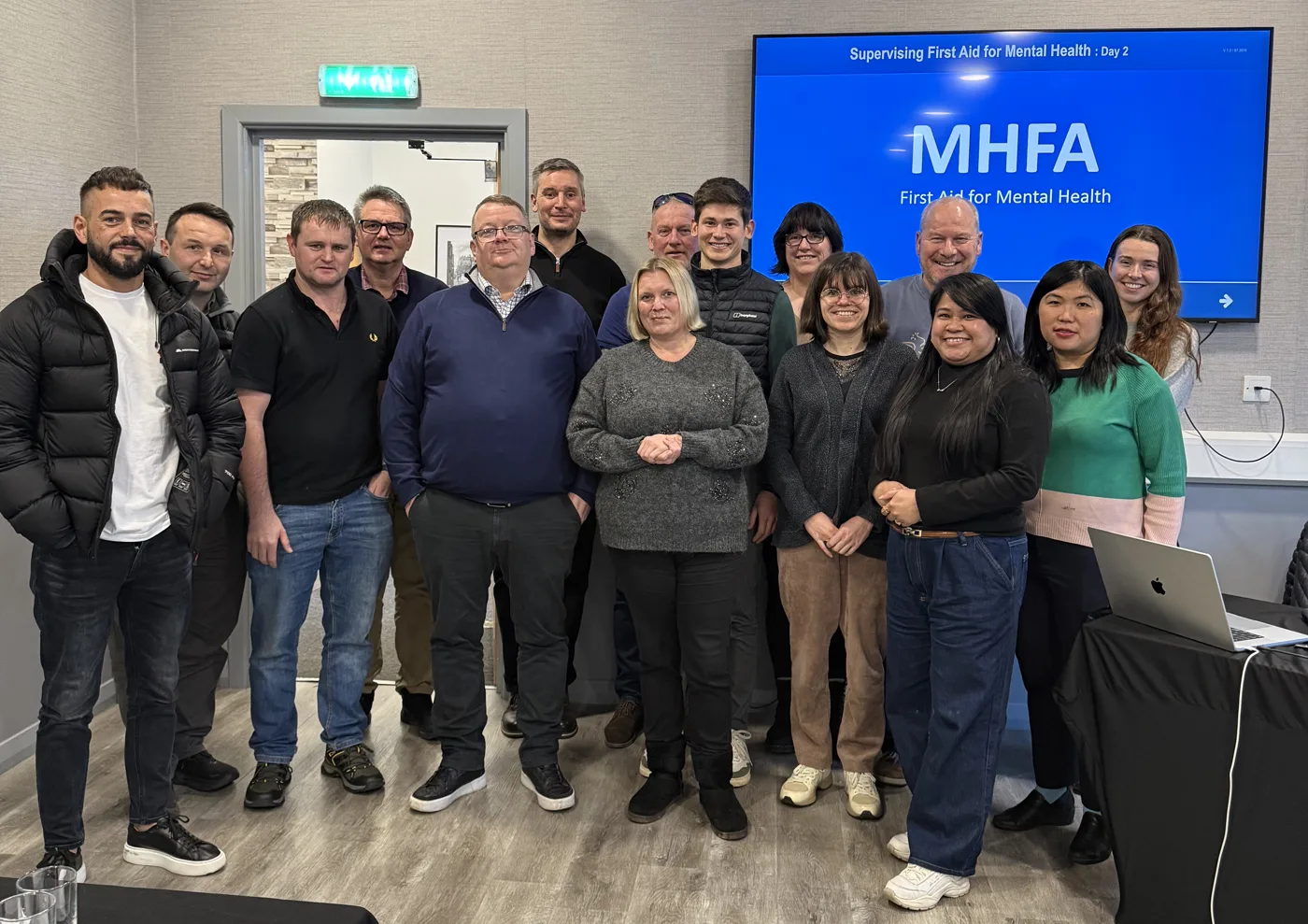
A group of participants after a two day mental health first aid course in Edinburgh
The group in Edinburgh
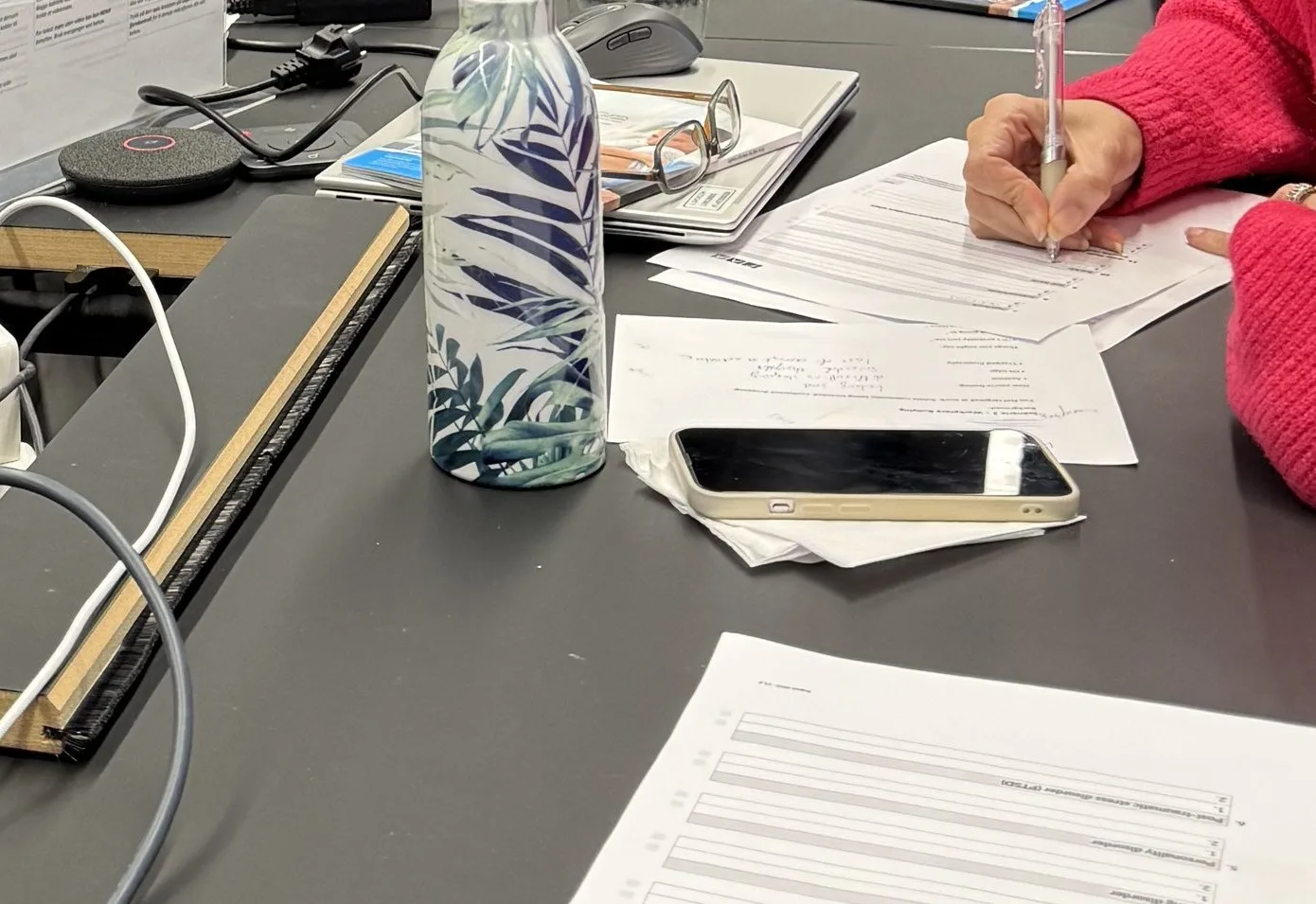
Participants working through written exercises during mental health training in Norway
Working through the course in Norway
The training venue in Norway
The venue in Norway

The challenge

Mental health can be difficult to talk about at work. People often notice when a colleague isn't quite themselves. They might become quieter, withdraw from the team, seem overwhelmed or simply behave differently.

The problem isn't always noticing. It's knowing what to do with what you've noticed. Should I say something? What if I make it worse? What if they tell me something serious? What am I actually supposed to do? Those were exactly the kinds of barriers the training was designed to address.

What we delivered

We delivered Mental Health First Aid training to groups of employees across different locations in the UK and Europe. The training gave participants a practical understanding of mental health and common mental health conditions, alongside the skills to recognise when somebody may be struggling.

But knowledge was only part of it. A major focus was helping people feel more comfortable having real conversations. How do you approach somebody? What do you say? How do you listen without immediately trying to fix things? What happens if somebody tells you they're having thoughts of suicide? And importantly, where does your responsibility end?

What participants took away

The aim wasn't for people to leave knowing more terminology. It was for them to leave feeling more able to do something when it mattered. Participants developed greater confidence in:

  • recognising possible signs that somebody may be struggling
  • starting a conversation about mental health
  • listening without judgement or trying to solve the problem
  • responding appropriately when somebody discloses something serious
  • understanding suicide and how to ask about it directly
  • signposting people towards appropriate support
  • understanding their own boundaries and responsibilities
  • recognising signs within their own mental health and wellbeing

Perhaps the biggest change was much simpler. Giving people permission to notice each other. Someone doesn't need to know whether a colleague has anxiety, depression or anything else. They don't need a diagnosis. Sometimes they just need enough confidence to say:

"You don't seem yourself lately. Are you okay?"

That conversation might last two minutes. But for the person who needs it, it could matter enormously.

Case study

450 managers in a high pressure regulatory organisation

A regulatory organisation in the public sector, where staff carry heavy responsibility and work under constant scrutiny.

The challenge

Around 450 managers needed the confidence to support their teams, in a way that fits the organisation's own policies and procedures and its legal duties.

What we are doing

A bespoke mental health awareness programme running over 12 months, in person at the organisation's headquarters and online. Managers learn to spot the signs that someone is struggling, hold a supportive conversation, connect what they do to the organisation's policies and procedures, and understand the legal side of their role.

Progress so far

We are about half way through the programme.

Questions

Mental health training for managers: your questions answered.

What does mental health training for managers cover?

Eight areas form the foundation: mental health awareness, employment law and duty of care, your own wellbeing policy, return to work and absence management, supportive conversations, creating an environment that promotes good mental health, signposting and referrals, and common mental health conditions. Each one is adapted to your policies, your structure and your sector.

How long is the course?

Half a day or a full day, depending on how much depth your managers need. We advise on the right length once we understand your organisation.

Can it be delivered online?

Yes. We deliver face to face at your premises or our Glasgow training centre, or fully online through live interactive sessions. The programme and the app are identical either way.

What are a manager’s legal responsibilities for mental health at work?

Employers have a duty of care. Health and safety law requires them to assess risks to health, including work related stress, and the Equality Act 2010 can apply when a mental health condition has a substantial and long term effect, which may mean reasonable adjustments. Managers are usually the people who carry these duties out day to day, which is why the programme covers what they mean in your organisation.

What is the branded manager app?

Every manager gets an app in your organisation’s colours, with the key learning from the programme, practical guides for real situations, and your own policies, support contacts and referral pathways built in. It means the answers are there when someone knocks on the door, not just on the day of the course.

Do managers need First Aid for Mental Health training as well?

They don’t have to. This programme focuses on the manager’s role: your policies, the law and the conversations. Some organisations also put managers through our credit rated First Aid for Mental Health courses. Anyone can take any level, and the right one depends on the role someone will take on, not how senior they are.

How much does manager mental health training cost?

Prices start from £1,250 for a half day and £2,000 for a full day. The final price depends on your numbers, the format and the depth of content needed, so book a free 20 minute call and we will talk it through. See our guide to mental health first aid training costs for what should be included.

How many managers can attend?

The programme is designed for management teams and cohorts, from a single team to several hundred managers over a year. Tell us your numbers and we will advise on the best approach.

Give your managers the confidence to get this right.

Get in touch and tell us about your organisation. We'll talk through what your managers need and build something that actually works for them. Free 20-minute call, no pitch deck.

Scroll to Top