
If something traumatic happened in your workplace tomorrow morning, would your managers know what to do by lunchtime?
A death. A serious accident. An assault. A colleague taking their own life. The worst time to invent your response is while you’re standing in the middle of one.
The short answer
Your job in the first 48 hours isn’t to fix people’s reactions. It’s to create enough safety, clarity and support that you don’t make an incredibly difficult situation harder. A simple way to hold that in your head: stabilise, communicate, support, watch, follow up.
“Back to normal” is part of the problem
Something abnormal has just happened. Someone may have died. Somebody may have witnessed something horrific. The team may have lost a colleague they worked beside every day. You can’t timetable people back to normal.
At the same time, I wouldn’t tell managers that nobody should be working. For some people, work and routine are genuinely helpful. They want something familiar to hold onto. The mistake is making that decision for everybody.
Somebody might genuinely be okay to work. Somebody else might sit at their desk and achieve absolutely nothing. Another person might look completely fine and then fall apart when they get home.
That’s why I’d be careful with phrases like “Come on, let’s get back to it”, “It’ll take everyone’s mind off it” or “We need to keep busy.” They usually come from a manager who doesn’t know what else to do. But they can accidentally say: your reaction is now inconvenient. I’d rather hear:
“There’s no expectation that everybody responds to this in the same way. We’ll keep things running where we can, but if you’re struggling, tell us. We’ll work out what you need.”
In those first couple of days the goal isn’t normal. It’s stability. People knowing what has happened, what happens next, who they can speak to, that they’re allowed to react, and that someone is going to check on them again tomorrow.
Work can wait a little. Getting somebody back behind their desk isn’t the same thing as getting them back.
The first 48 hours

- Stabilise. Make sure people are safe, and that someone has taken control.
- Communicate. Say what you know, what you don’t know yet, and when you’ll update people. Don’t fill the gaps with guesses, and don’t go silent either, because silence fills up with rumours.
- Support. Basic human contact, flexibility, practical help, and clear routes to professional support.
- Watch. Notice who is struggling, including the people who look fine.
- Follow up. Check in again tomorrow, next week and later. Not just once.
The mistakes I see most often
- Saying too much too quickly. “This is what we know. This is what we don’t know yet. We’ll update you” is better than getting facts wrong.
- Saying nothing. The vacuum gets filled with rumour.
- Assuming everyone will react the same way. One person is crying, another is cracking jokes, another seems unaffected. None of those reactions alone tells you how affected someone is.
- Forcing people to talk. Offer the opportunity. Don’t make disclosure the intervention.
- Bringing in counselling and thinking the job is done. Professional support matters, but so does what the manager does every day afterwards.
- Making promises you can’t keep. “Everything will be okay” or “Nobody else is at risk.” In those first hours, you may not know that.
- Treating a suicide like any other workplace death. It needs particular care.
- Doing one check in. Everyone asks “Are you okay?” on Tuesday. By the following Tuesday, everyone assumes they are. Sometimes that’s when the impact is only beginning to show.
Who gets missed
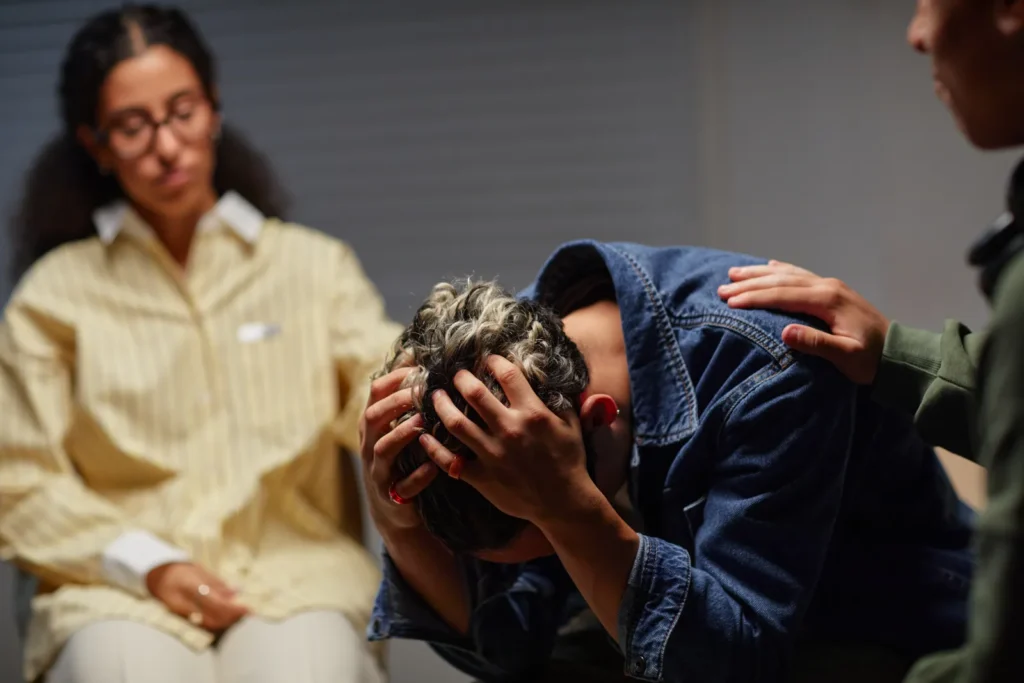
The obvious people usually get support: the person who witnessed it, the closest colleagues, the immediate team, the family. But there are people around the edges who can be completely missed:
- The receptionist who took the phone call.
- The first aider who dealt with the incident.
- The manager who had to tell the team, or phone the family.
- The colleague who swapped shifts and is now thinking, “That should have been me.”
- Someone who wasn’t close to the person, but has been through something similar in their own life.
- People who were off that day and come back to a workplace that suddenly feels completely different.
And sometimes the person everyone describes as “absolutely fine.” People don’t always respond to trauma by visibly falling apart. Some become incredibly practical. They organise things, look after everybody else, make the tea and keep working. Then three days or three weeks later, it hits them.
So rather than asking only “Who was directly involved?”, ask: who witnessed it, who dealt with the aftermath, who was close to the person, who had responsibility afterwards, who might this have affected for reasons we don’t know about, and who’s looking after the people looking after everyone else?
Managers are part of the workforce too
This is the mistake that’s rarely talked about. Managers are dealing with their own reaction while being expected to know what to say, update senior leaders, look after their team, possibly speak to family members, and somehow make sensible operational decisions. That’s a hell of an ask.
Everyone asks the manager, “What are we doing?” Very few people ask, “How are you doing?”
Normal reactions, and when to worry
In the days and weeks afterwards, people can have disturbed sleep, intrusive memories, feel on edge, irritable, tearful or numb, struggle to concentrate, feel guilty, avoid reminders, or want to talk about it again and again. Those reactions can be frightening, but on their own they don’t mean someone has PTSD or needs therapy.
Look less at the individual symptom and more at what’s happening over time. Is it gradually settling, or staying the same, getting stronger, or starting to seriously interfere with their life? I’d be more concerned if someone is becoming increasingly isolated, can’t function at work or at home, is relying heavily on alcohol or drugs, has severe or persistent nightmares or flashbacks, is overwhelmed by guilt, or simply isn’t beginning to recover as the weeks pass.
Don’t diagnose. Notice.
You’re not trying to decide whether someone has PTSD. You’re noticing that they haven’t slept properly for two weeks, have stopped coming in, are drinking every night and can’t get what happened out of their head. That’s enough. You don’t need a diagnosis to have a conversation. If someone needs more help, our trauma and PTSD therapy page explains how therapy can help.
Some things shouldn’t be watched and waited on. If somebody talks about not wanting to be here, suicide, or harming themselves or someone else, or you believe there’s an immediate risk to their safety, get help now. In an emergency call 999. In Scotland you can call NHS 24 on 111, and Samaritans are free on 116 123, day or night.
What to have in place before anything happens
Not a 47 page policy sitting on SharePoint that nobody has read. Something managers can actually use at 9:30 on a Tuesday morning when something awful has just happened. At minimum, it should answer:
- Who takes control, and who needs to be informed?
- Who communicates with staff, and what can they say?
- Who contacts the family, if that’s appropriate?
- What happens to the immediate team?
- What flexibility can managers offer around work, shifts and going home?
- Where can people get support, inside and outside the organisation?
- Who identifies the people who may have been particularly affected?
- Who supports the manager?
- When do we check on people again? Tomorrow, next week and later.
- What changes if the incident involves suicide?
Know who you’re going to call. If something significant happened tomorrow, do you know who can provide psychological support, whether they can attend quickly, and whether staff can speak to someone confidentially? Or is somebody in HR going to be searching online for a trauma counsellor while everything is kicking off?
And train managers before they need it. Giving somebody an employee assistance phone number isn’t a trauma response plan. Managers need some confidence about what to say, what not to say, how not to force people to talk, and when something is outside their role. You might also find our articles on how EAP, occupational health and first aiders fit together and returning to work after mental health absence useful.
Finally, make someone responsible for the weeks afterwards, not just the incident. Organisations can be incredibly attentive for 48 hours. Then three weeks later everybody has moved on, except some of the people affected haven’t.
Common questions
Should we get everyone together to talk about it straight away?
Not as a requirement. Making people talk about what happened immediately afterwards isn’t necessarily helpful. Give people the opportunity to talk, and let them choose whether and when to take it.
Is our employee assistance programme enough?
It matters, but it isn’t a response plan on its own. What the immediate manager does can matter enormously too: basic human contact, clear information, flexibility, practical help and checking in again.
How long should reactions last?
There’s no timetable. Some people feel better within a couple of weeks. Others seem fine at first and struggle later. The useful question is whether someone is gradually finding their feet, or struggling more as time goes on.
What is different when the death is a suicide?
It needs particular care around language, what information is shared, exposure to details, support for the people closest to the person, and awareness that others may be at increased risk. The British Standards Institution’s guide BS 30480 Suicide and the Workplace covers this in more depth.
Get ready before you need it
We help organisations put a simple post incident plan in place and train managers to use it, through our bespoke training and workplace mental health systems review. Book a free call and we’ll talk it through.