“I honestly thought I was having a heart attack.”
That’s how a lot of people describe their first panic attack. Your heart races, your chest tightens, you can’t get a proper breath, and your mind tells you something is badly wrong. Then it passes, and you’re left shaken and wondering when it will happen again.
I’m Andy Griffiths, a psychotherapist and clinical hypnotherapist in Glasgow. Anxiety is the main thing I work with, and panic attacks are a big part of that. This guide explains what’s going on during a panic attack, why they keep coming back, and how I help people get on top of them.
Looking for help now? See my panic attacks therapy page to find out how I work and how to book a free consultation.
What a panic attack feels like
Panic attacks feel different for different people, but they often include:
- A pounding or racing heart
- Feeling short of breath, or like you can’t get enough air
- Tightness or pain in the chest
- Dizziness, shaking or sweating
- Tingling in your hands or face
- Feeling sick
- A sense that things aren’t real, or that you’re detached from your body
- A strong fear that you’re dying, losing control or going mad
Most panic attacks peak within a few minutes and pass within about 20 minutes, even though it feels much longer at the time.
If you haven’t had these symptoms checked, please see your GP. Chest pain and breathlessness can have physical causes, and it’s important to rule those out. Once you know it’s panic, it becomes much easier to work with.
Why panic attacks keep coming back
A panic attack is your body’s alarm system going off when there’s no real danger. Adrenaline floods in, your breathing changes, and your body gets ready to fight or run.
The problem is what happens next. After a frightening attack, it’s natural to start watching for the next one. You notice every flutter of your heart. You avoid the supermarket, the train or the meeting where it last happened. That watching and avoiding keeps the alarm on a hair trigger, so it goes off more easily. This is often how occasional panic attacks turn into panic disorder.
Panic also rarely comes from nowhere. Often it’s linked to stress that has built up over time, or to something that happened in the past that never quite settled. That’s why I’m interested in more than the attacks themselves.
I know this from the inside as well. I’ve had panic attacks myself, and I remember how frightening and isolating they were. It’s a big part of why I do this work, and why I take it seriously when someone tells me they’re scared of the next one.
How I work with panic attacks
I don’t rely on a single method. I combine approaches depending on what’s behind your panic:
- Hypnotherapy. Panic happens faster than thinking. You can know perfectly well that you’re not in danger and still feel the alarm go off. Hypnotherapy works with that automatic part of the response, helping your body learn to stay calmer and giving you a steadiness you can call on in everyday life.
- Psychotherapy. Talking things through properly, to understand what started the panic, what keeps it going, and the patterns behind it.
- EMDR and brainspotting. If your panic began after something frightening or overwhelming, these approaches help your brain process what happened so it stops setting off the alarm.
- Practical tools. Simple ways to handle an attack when it starts, so it feels less frightening and passes sooner.
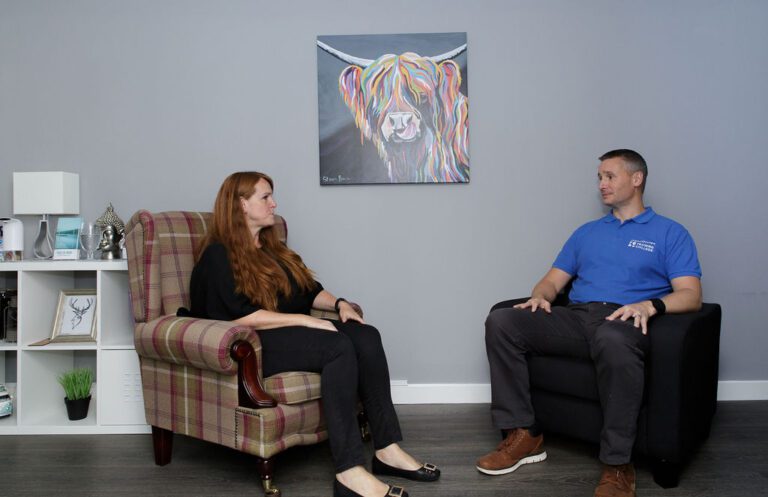
You stay in control throughout. Hypnosis isn’t about being made to do anything. It’s a calm, focused state that you can come out of whenever you choose.
Does hypnotherapy work for panic attacks?
CBT has the most research behind it for panic disorder, and it’s what the NHS usually recommends first. The research on hypnotherapy is smaller, but encouraging, and many people find it helps, especially when they’ve already tried CBT and found that understanding their panic wasn’t enough to stop it. I’ve written an honest look at whether hypnotherapy works for anxiety if you’d like to know more.
I can’t promise a particular result, and I’d be wary of anyone who does. What I can say is that panic attacks are one of the things people most often come to me about, and many of them get to the point where panic no longer runs their life.
What to expect
- A free consultation first. A free 20 minute conversation, in person at Orchard Park in Carmyle, by phone or on Zoom. Tell me as much or as little as you like, and I’ll be honest about whether I think I can help.
- Sessions at your pace. Most people see me for between two and four sessions, though it varies. We’ll review how things are going as we go.
- In person or online. Sessions work just as well over Zoom.
- Cost. Sessions start from £70. You can read more about what hypnotherapy costs in Glasgow.
Common questions
Can hypnotherapy stop panic attacks?
For many people, it helps a lot, especially alongside other approaches. It works best when we also look at what’s behind the panic, not just the attacks themselves.
What if I panic during a session?
That’s a very common worry, and it’s fine. We go at your pace, and you’re in control throughout. If something feels too much, we stop.
Do I need to see my GP first?
You don’t need a referral to see me. But if you haven’t had your symptoms checked, I’d encourage you to see your GP to rule out a physical cause.
Can you help with panic attacks and intrusive thoughts?
Yes. The two often go together. You might find my article on why anxiety causes intrusive thoughts helpful.
Do you see people outside Glasgow?
Yes. I see people online from across the UK.
If you need help right now
If you’re in crisis or feel unable to keep yourself safe, please don’t wait for a therapy appointment. Call NHS 24 on 111, contact your GP, or call Samaritans free on 116 123 at any time. Breathing Space is also there to talk on 0800 83 85 87.
Book a free consultation
If panic attacks are starting to shape your life, you don’t have to keep managing them on your own. The first step is a free 20 minute consultation, in person at Orchard Park in Carmyle, by phone or on Zoom.
You can read more about anxiety therapy in Glasgow, book your free consultation, or call 0141 340 9870.