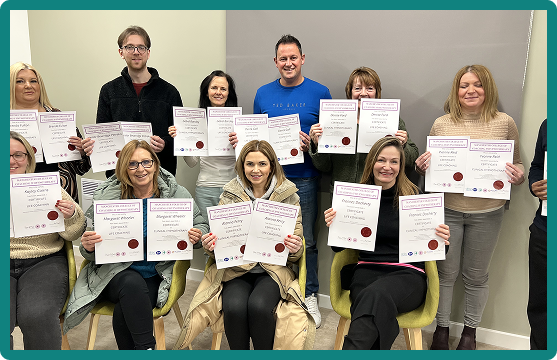
Diploma in Clinical Hypnotherapy Birmingham
Train to Become a Professional Hypnotherapist
Nine months of practical, accredited hypnotherapy and coaching training in Birmingham.
Learn face to face with your Birmingham trainer while connecting live with Andy Griffiths and our main Piece of Mind training centre in Glasgow.
Go beyond learning hypnosis.
Learn how to work with real people, real problems and everything that doesn’t fit neatly into a script.
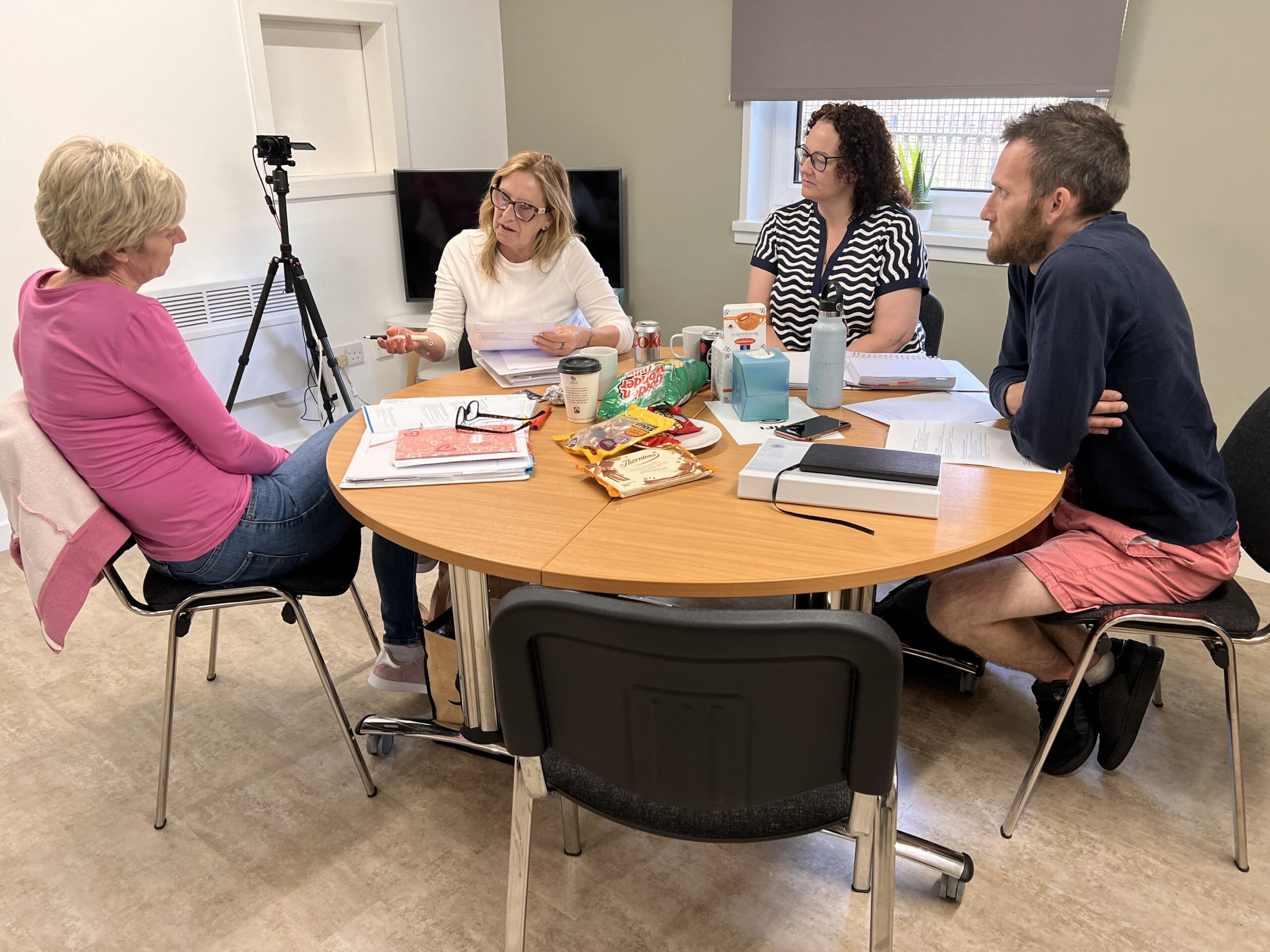
Diploma in Clinical Hypnotherapy & Coaching
If you’re serious about becoming a hypnotherapist, this is our complete professional training programme.
The Diploma takes place over nine months and is designed to take you from the foundations of hypnosis through to working confidently with more complex client presentations.
You don’t need previous experience.
You can enrol directly onto the full Diploma from the beginning.
Or you can start with our 4 Month Foundation Diploma and decide after the first four modules whether you want to continue.
Either way, you’re following the same training pathway.
The difference is where you choose to stop.
Professional Hypnotherapy Training in Birmingham
There is a big difference between knowing some hypnotherapy techniques and feeling confident when somebody actually sits in front of you and asks for help.
That’s the gap we want this course to close.
During your nine months you’ll learn hypnosis, therapeutic communication, coaching, NLP and a range of psychotherapy approaches.
But you’ll also learn something much more important.
How to think like a therapist.
- How do you work out what's actually going on?
- Why hasn't the person been able to change this already?
- What happens when the technique you planned doesn't work?
- When do you change direction?
- When should you slow things down?
- And when is something outside your competence and better referred elsewhere?
That’s what professional training needs to prepare you for.
How Does the Birmingham Diploma Work?
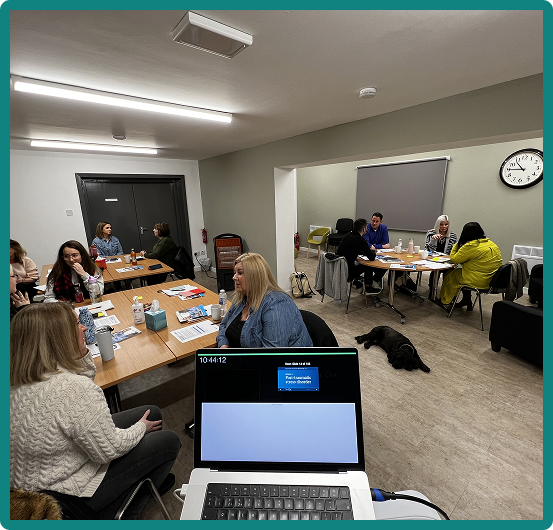
You’ll attend your training face to face at our Birmingham location.
Ian, your Birmingham Piece of Mind trainer, is physically in the classroom with you throughout the training.
He’ll teach, guide your practical work, answer questions and help you develop your skills over the nine months.
At the same time, the Birmingham classroom connects live with Andy Griffiths and our main Piece of Mind training centre in Glasgow.
Both classrooms train together.
Teaching, demonstrations, questions and discussions can move between Birmingham and Glasgow throughout the weekend. Then you'll practise face to face with other students in your Birmingham classroom with your trainer there to supervise and support you.
You're not attending an online course from Birmingham.
You're attending a live classroom that happens to be connected to another live classroom.
Why Choose the Full Diploma?
The Diploma is designed for people who want more than an introduction to hypnotherapy.
You may want to:
- Become a professionally qualified hypnotherapist
- Start your own hypnotherapy practice
- Add therapeutic skills to work you already do
- Develop the confidence to work with a wider range of client issues
- Understand people and emotional change at a much deeper level
- Learn an approach that goes beyond scripts and standard techniques
You don’t need to know exactly what your future practice will look like yet.
We’ll help you develop that as your confidence and experience grow.
Nine Months to Build Your Skills Properly
We deliberately don’t try to turn you into a therapist in a couple of weekends.
Confidence takes time.
Confidence takes time.
Practise it.
Go away and think about it.
Come back.
Add another layer.
Practise again.
And gradually the pieces start connecting.
By the later stages of the course, you’re not simply learning individual techniques.
You’re learning how to decide what somebody actually needs.
The Diploma consists of 9 training weekends over 9 months, providing around 120 hours of classroom teaching alongside practice, study and development between modules.
Course Contents
Discover what hypnosis really is—and what it isn’t. In this opening module, you’ll learn how to guide someone into hypnosis confidently and safely, using powerful yet simple tools to help the body relax and the mind shift. We’ll explore how the brain works under hypnosis and the foundations of effective therapeutic language, with real-world skills you can apply straight away.
- How to explain hypnosis in a grounded, client-friendly way
- What hypnosis feels like and how to deepen it effectively
- The brain’s left/right functions and why they matter in therapy
- Induction techniques you can personalise to each client
- Types of hypnotic inductions and how to choose the right one
- Suggestibility tests (yes, you’ll be doing the famous ice bucket!)
- Building progressive relaxation and linking techniques
- Exploring the work of Milton Erickson and the Ericksonian style
- The role of metaphor and the power of language in change work
- How to use visualisation to shift emotional and physical state
You’ll leave this module knowing how to safely guide someone into hypnosis—and how to make that moment feel like the start of something powerful and purposeful.
This module goes deeper into the change work. You’ll learn how language shapes the brain, how to listen like a counsellor, and how to begin working with the unconscious mind in a way that feels both structured and human. You’ll start to recognise what hypnosis looks like in the real world—and how to create the conditions for it without overcomplicating the process.
- How to use direct and indirect suggestion like a pro
- Full ego-strengthening sequences that build confidence and internal safety
- Ericksonian language patterns—and how to use them naturally
- How to bypass the critical faculty and access the unconscious mind
- Spotting the signs of hypnosis (even subtle ones)
- Listening as a counsellor: how to hear what’s not being said
- Understanding the positive intention behind every symptom
- NLP foundations: clean language, representational systems, and more
- Taking a case history that actually helps the work
- Contraindications and when not to treat
- Managing abreactions with calm confidence
- How to close a session with clarity and containment
By the end of this module, you’ll feel more confident using your voice, your presence, and your language to guide real therapeutic change through hypnosis.
This module is where theory starts turning into solid practice. You’ll explore how belief systems are formed—and how to shift them. You’ll learn how to work with clients ethically, safely, and confidently, and how to begin using advanced tools like NLP, clean language, and client metaphors to make deep change possible.
- How belief systems are formed—and how to shift them
- Using clean language to uncover unconscious patterns
- Recognising and interrupting behaviour loops
- How to reverse or reframe a client’s metaphor
- NLP techniques for change and emotional flexibility
- Eye referencing: what to look for and how to use it
- The structure of post-hypnotic suggestions that stick
- Working with weight loss and eating behaviours
- Parts therapy basics: how to speak to “the part of me that…”
- Anchoring safety and emotional regulation
- When to use regression, and when not to
- Confidentiality, ethics, and professional boundaries
- Good practice: paperwork, records, and knowing your limits
You’ll leave this module with real tools to help real people—confident in both the techniques you’re using and the professional standards you’re holding
This module brings everything together combining the therapeutic tools, client confidence, and professional know-how you need to start working with real clients. You’ll learn how to tackle common issues like smoking, weight loss, stress and performance anxiety, while also deepening your ability to hold emotional space, reflect on your practice, and run a professional, ethical service.
- Creating and installing new, positive belief systems
- EFT tapping: techniques for emotional release and regulation
- Working with stress and the nervous system
- Smoking cessation: how to do it without scripts or scare tactics
- Hypnosis for pain relief: realistic tools and ethical use
- Confidence, public speaking, and performance anxiety
- Post-hypnotic suggestions for long-term behavioural change
- Future pacing and visualisation to reinforce results
- Reflective practice: learning and growing from every session
- Supervision: how to get support and stay grounded
- What to say (and not say) in your early client sessions
- Boundaries, safeguarding, and emotional containment
- Managing expectations and knowing your professional limits
- Setting up in practice: records, policies, referrals, and marketing
- Ethical frameworks and staying within scope of practice
By the end of this module, you won’t just feel ready to help people you’ll feel ready to build a safe, ethical, and effective practice that reflects your own values, skills, and voice.
Not every client needs deep therapy. Some are stuck in habits, choices, or lack of direction—and what they need is clarity, accountability, and support. This module teaches you how to step confidently into the role of coach, helping clients move forward, take action, and reconnect with their potential.
You’ll learn how to spot when someone is ready for coaching over therapy—and how to guide meaningful change without needing to “fix” the past.
- The difference between therapy and coaching (and how to combine them safely)
- Values-based coaching: how to help clients connect with what truly matters
- Setting goals that are meaningful—not just measurable
- Identifying resistance, self-sabotage, and fear of change
- Building emotional accountability and realistic action plans
- Coaching language: empowering, clean, and forward-focused
- How to track progress (even when the client can’t see it yet)
- When not to coach: recognising when deeper work is needed
- The role of challenge, reflection, and support in lasting growth
- Blending coaching with hypnosis, NLP, and therapeutic insight
You’ll leave this module able to support clients who are ready to move forward—not by fixing them, but by walking alongside them as they do the work to change their own lives.
This module is all about fast, effective change. You’ll learn how to use advanced NLP strategies to work directly with the unconscious mind—releasing phobias, disrupting long-held patterns, and helping clients feel empowered in record time.
You’ll also explore how to work with fear-based behaviours using proven desensitisation and reprocessing techniques—so that you can confidently support clients with everything from flying fears to spider phobias.
- Spinning, reversing, and transforming emotional states using NLP
- The Rewind Technique (Fast Phobia Cure) and how to deliver it safely
- Systematic desensitisation: how to gradually reduce anxiety or fear
- Shape-shifting: energetic release techniques for physicalised emotions
- EMDR and eye-processing techniques
- NLP anchoring, state switching and rapid rapport tools
- Real-life phobia work: spiders, cats, dogs, needles, flying
- Hypnosis in sport and performance
- Installing new emotional pathways quickly and gently
You’ll leave this module equipped with techniques that work fast—without skipping over the depth. You’ll be ready to support clients through fears, phobias, and emotionally stuck states using safe, structured, and impactful approaches.
This is the emotional engine room of the course. You’ll explore regression in all its forms—diagnostic, age-based, free-floating, and even past life regression—learning how to uncover and work with the beliefs and emotional experiences that shape how clients think, feel, and behave.
Whether the source of pain is early childhood or something more symbolic, this module gives you the tools to meet it gently, hold it safely, and guide clients through deep resolution.
- How to use regression safely and ethically
- Diagnostic, age, free-floating and symbolic regression
- Past life regression: how to use it appropriately and when to offer it
- Rebirthing and pre-birth experiences
- Symptom analysis and emotional pattern mapping
- Dreams, nightmares and subconscious metaphor
- Time distortion and pseudo-orientation in time
- Belief work and emotional reframing
- Dissociation, safety protocols, and emotional pacing
- Complex client issues: asthma, allergies, skin conditions, insomnia
- Supporting clients through catharsis and emotional release
- Integrating new beliefs with strength, safety and clarity
By the end of this module, you’ll be confident guiding clients through layered emotional work—whether that’s rooted in real memory, symbolic narrative, or imagined experience with meaning. You’ll be working at the level where change truly happens.
In this module, we go beyond the obvious. You’ll learn how to work with anxiety not just as a feeling—but as a symptom of deeper patterns, emotional conflict, and unmet needs. You’ll also learn how to support clients through physicalised symptoms and compulsive behaviours where the root is often unconscious and emotional.
From eating disorders to bruxism, from hair pulling to memory lapses—this module is about helping clients reclaim safety, confidence, and control in their body and mind.
- What anxiety really is—and why it often masks deeper needs
- How to treat panic, OCD, health anxiety and generalised fear
- Working with compulsive behaviours including trichotillomania (hair pulling)
- Understanding and supporting eating disorders with care and ethics
- Bruxism (teeth grinding) and unconscious tension patterns
- Memory enhancement techniques for focus, recall, and clarity
- Hypnotic strategies for tinnitus, snoring, and sleep apnoea
- Supportive tools for clients with dyslexia and processing differences
- Emotional patterning: shame, perfectionism, and control
- When to refer and how to work collaboratively with other professionals
- Anchoring calm and safety through structured behavioural change
By the end of this module, you’ll be equipped to support clients dealing with issues that don’t always “look emotional”—but have emotion at their core. You’ll know how to respond with care, clarity, and tools that make a real difference.
This module focuses on the heavier emotional realities that clients bring into the room—grief, depression, anxiety, trauma, and chronic illness. You’ll learn how to use hypnosis in a grounded, ethical, and sensitive way when working with complex emotional presentations and physical health conditions.
You’ll also gain the confidence to work with specific client groups, including children and those navigating serious illness or loss.
- Working safely and effectively with depression and low mood
- Understanding and treating anxiety and panic attacks
- Grief, bereavement, and loss: how to hold space without “fixing”
- Using hypnosis with children and young people (ethics and techniques)
- Supporting clients with cancer—navigating fear, pain, and emotional overwhelm
- Hypnotherapy for heart conditions and medical anxiety (in partnership with care teams)
- Grounding techniques for emotional intensity
- How to identify red flags and know when to refer
- Containment, pacing, and creating a trauma-aware practice
- Anchoring confidence, resilience, and internal safety in clients with chronic stress
- Language that empowers rather than pathologises
- Developing post-hypnotic anchors and emotional regulation strategies
You’ll leave this module more prepared to meet your clients in their most vulnerable moments—and more capable of working compassionately within your scope of practice.
In this final module, we bring together everything you’ve learned—refining your therapeutic style, expanding your clinical range, and preparing you to practise safely, ethically, and professionally. You’ll explore more advanced client presentations, complete your assessments, and gain a clear understanding of your responsibilities as a qualified hypnotherapist.
This is where theory becomes readiness—so you feel equipped to support real people with real lives.
- Supporting clients with paranoia and high mistrust
- IBS and migraines: when the body holds emotional pain
- Hypnosis in dentistry: pain management, gag reflex, procedural anxiety
- Sleep disorders, insomnia, and sleep pattern resetting
- Final written exam and practical assessment: demonstrating competence
- Client care, case notes, and best-practice follow-up
- Understanding your role as a hypnotherapist (not a fixer, saviour, or substitute)
- Legal responsibilities, insurance, and data protection (UK-compliant)
- Complaints handling, safeguarding, and ethical dilemmas
- Scope of practice: how to work safely within your remit
- Creating a reflective, ethical, and client-centred approach
- Building your professional network and accessing ongoing supervision
You’ll leave this module ready to practise safely, confidently, and with integrity—knowing not just how to deliver effective therapy, but how to hold yourself to a standard that earns trust.
Upcoming Training Dates
February 2027 – Diploma in Clinical Hypnotherapy - Click here to enrol
Flexipay 9x
Spread your payments over 9 instalments- Classroom Training
- Access to online training platform
- GHSC and ACCPH Accreditation
- Training manual
- Private Facebook Group
- Additional live online training (via Zoom)
Single Payment
Clear the full amount due in one easy payment- Classroom Training
- Access to online training platform
- GHSC and ACCPH Accreditation
- Training manual
- Private Facebook Group
- Additional live online training (via Zoom)
Early Bird Price (One-Time Payment)
Save £100 when enrolling three months before course- Classroom Training
- Access to online training platform
- GHSC and ACCPH Accreditation
- Training manual
- Private Facebook Group
- Additional live online training (via Zoom)
Learn the Piece of Mind Method
Hypnotherapy is incredibly powerful.
But after thousands of hours in the therapy room, we’ve learned that sometimes hypnosis isn’t the whole answer.
People don’t arrive as neat problems.
Someone might tell you they have anxiety.
Behind that might be fear, trauma, beliefs, avoidance, shame, habits or something completely different.
That’s why the Diploma teaches more than hypnotherapy.
Throughout the programme you’ll learn the Piece of Mind Method.
It’s our way of bringing together hypnotherapy with psychotherapy techniques, neuroscience, NLP, coaching and practical approaches to emotional change.
We’re not teaching you to throw ten different techniques at somebody.
We’re teaching you to understand why you might use one approach rather than another.
That’s a very different skill.
Learn From People Who Actually Work With Clients
The Diploma is taught by practising therapists and trainers who understand what happens outside the classroom.
Andy Griffiths developed the Piece of Mind Method through thousands of hours working directly with therapy clients.
His clinical work has included anxiety, trauma, phobias, panic, habits, confidence and a wide range of emotional and behavioural difficulties.
Ian provides your face to face training and support in Birmingham, while Andy and the wider Piece of Mind training team connect live from Glasgow.
So you’re learning from people who don’t just teach therapy.
They actually do it.


Fully Accredited Professional Training
Your Diploma is externally accredited and designed to provide a recognised pathway into professional hypnotherapy practice.
Our training is recognised by professional organisations including:
- General Hypnotherapy Standards Council (GHSC)
- Complementary and Natural Healthcare Council (CNHC)
- The Hypnotherapy Association
- Association for Coaching & Counselling Professionals (ACCPH)
On successful completion of the full programme, you’ll have the training and qualification required to take the next steps towards professional registration, insurance and working with clients.




Start Your Hypnotherapy Journey
Your hypnotherapy training will be a time of amazing personal growth, I guarantee you that!

Fully Accredited Training
Externally verified training accredited by the GHSC and Hypnotherapy Association.
Online Portal
To support your classroom learning you can access all the training material online.
Community
Meet fellow students in our online community, ask questions, share ideas and be inspired.
This is your time to explore who you are, who you want to become, and how you’ll play a part in the world.

As a student you will be welcomed to our online community where you can ask questions and share ideas with other students.


You will have support after your training from me as your teacher either through email, telephone or on a zoom session.
Flexible payment options make the Diploma course as accessible as possible. When you are ready to get started all you need to do is click the enrol button below
More Than the Nine Training Weekends
Your development continues between classroom weekends.
You’ll have access to our online student learning platform where you’ll find additional lessons, training material and resources to support what you’re learning in Birmingham.

Live Classroom Training
Nine months of structured face to face training and practical work.
Connected Training Centres
Train in Birmingham while connecting live with our main Glasgow classroom and teaching team.

Student Workbook
Use your workbook throughout the course for notes, exercises, scripts and practical learning.

Student Community
Connect with students, share ideas and ask questions outside the classroom.

Online Student Portal
Continue learning between weekends with supporting lessons, videos and resources.

Ongoing Support
Get help as your knowledge, practical skills and confidence develop.
The aim is to keep you learning between modules rather than disappearing for a month and starting again each time.
What You'll Learn
By progressing through the full Diploma you’ll develop skills in areas including:
Hypnotic induction and deepening
Direct and indirect hypnosis
Therapeutic language
Suggestion and metaphor
Coaching
NLP
Working with beliefs
Emotional regulation and change
Anxiety
Habits and behavioural patterns
Phobias and fears
Regression approaches
Inner conflict and deeper belief work
Grief and emotional health
Working with more complex client presentations
Professional boundaries
Ethics and client safety
Session planning
Adapting therapy to the individual
Building confidence in professional practice
And importantly, you’ll learn how these different areas connect rather than treating them as separate techniques.
Who Is This Course For?
The Diploma could be right for you if:
- You're serious about working professionally with clients
- You want a new career in hypnotherapy
- You already work with people and want to expand your skills
- You want more than a collection of hypnosis scripts
- You want practical experience as well as theory
- You want to understand anxiety, habits, emotions and behaviour more deeply
- You value training that combines hypnotherapy with wider therapeutic approaches
- You want ongoing support while developing your practice
You don’t need:
A background in psychology.
To have studied therapy before.
To be the most confident person in the room.
That’s what nine months of training is there to develop.
What You'll Walk Away With
On successful completion of the Diploma, you’ll leave with:
- A recognised Diploma in Clinical Hypnotherapy
- Professional hypnotherapy training
- A coaching qualification
- Extensive practical classroom experience
- A broad toolkit of therapeutic approaches
- Experience structuring and adapting client sessions
- A deeper understanding of emotional and behavioural change
- Access to the Piece of Mind Method
- A route towards professional registration and insurance
- Support as you take your next steps into practice
But the thing we really want you to leave with is confidence.
Not confidence that you’ll know the answer to absolutely everything.
No therapist does.
Confidence that you can sit with another human being, listen properly, think about what’s happening and know how to begin helping them.
From Student to Practitioner
Something changes during nine months of training.
At the beginning, you’re usually concentrating on everything.
What do I say next?
Am I doing this right?
What if I forget something?
What if hypnosis doesn’t work?
Then, gradually, you stop trying so hard to remember every individual step.
You start listening more.
You notice things.
You become curious.
You start understanding why you’re doing something instead of simply remembering what you’re supposed to do.
That’s when you begin moving from learning techniques to becoming a practitioner.
Got Questions About the Diploma?
Nine months is a commitment.
So ask questions before you make it.
You might want to know more about accreditation.
You might want to understand exactly how Birmingham connects with Glasgow.
You might be wondering whether you should start with the Foundation instead.
Or you might simply want to know:
“Could I actually do this?”
Book a call and talk it through with us.
There’s no pressure to enrol.
We’ll explain how the training works and help you decide whether Piece of Mind is the right place for you to train.
How to Attend
In Person
Join your fellow classmates in person at Orchard Park Centre in Glasgow.
Online via Zoom
Join us from your own
home over Zoom.
Switching from in person to online or vice versa during the course is not possible. So, please be sure to choose carefully how you d like to attend as you cannot change later.
To make enrolling as easy as possible, we have 3 payment options. Click a date below to see pricing and payment plans.
February 2027 – Diploma in Clinical Hypnotherapy - Click here for more details
- Sat 27 – Sun 28 Feb 2027
- Sat 27 – Sun 28 Mar 2027
- Sat 3 – Sun 4 Apr 2027
- Sat 24 – Sun 25 Apr 2027
- Sat 8 – Sun 9 May 2027
- Sat 5 – Sun 6 June 2027
- Sat 4 – Sun 5 Sept 2027
- Sat 2 – Sun 3 Oct 2027
- Sat 6 – Sun 7 Nov 2027
Any questions?
If you’re anything like me, you get to this part of the page and you’ve still got some questions.
Well, don’t worry, let’s jump on a call and I’ll do my best to help.
The booking widget below lets you pick a day and time that suits you directly in my calendar.

What Our Students Say...

This training gave me the depth and structure I was missing. I finally feel qualified, not just certified.
Norrina Meechan
Doing the Diploma gave me the confidence to actually take on clients and start charging, not just because I had the certificate, but because I knew what I was doing.
Carol Mcbride
I have just completed the Hypnotherapy Diploma Course delivered by Andy. The whole learning experience was amazing. Andy’s experience and teaching approach helped me get the most out of the course. I feel properly prepared to go out and begin my work as a therapist.
Sheila Thomson
You're Not Just Collecting a Certificate
A certificate matters. Accreditation matters. Professional standards matter. But none of those things are much comfort when a client is sitting opposite you and you don’t know what to do. That’s why we keep coming back to practical competence.
- Can you listen?
- Can you understand what's keeping the problem going?
- Can you choose an appropriate approach?
- Can you adapt?
- Can you recognise your limits?
- Can you help somebody feel safe enough to do the work?
That’s the therapist we’re trying to help you become.